
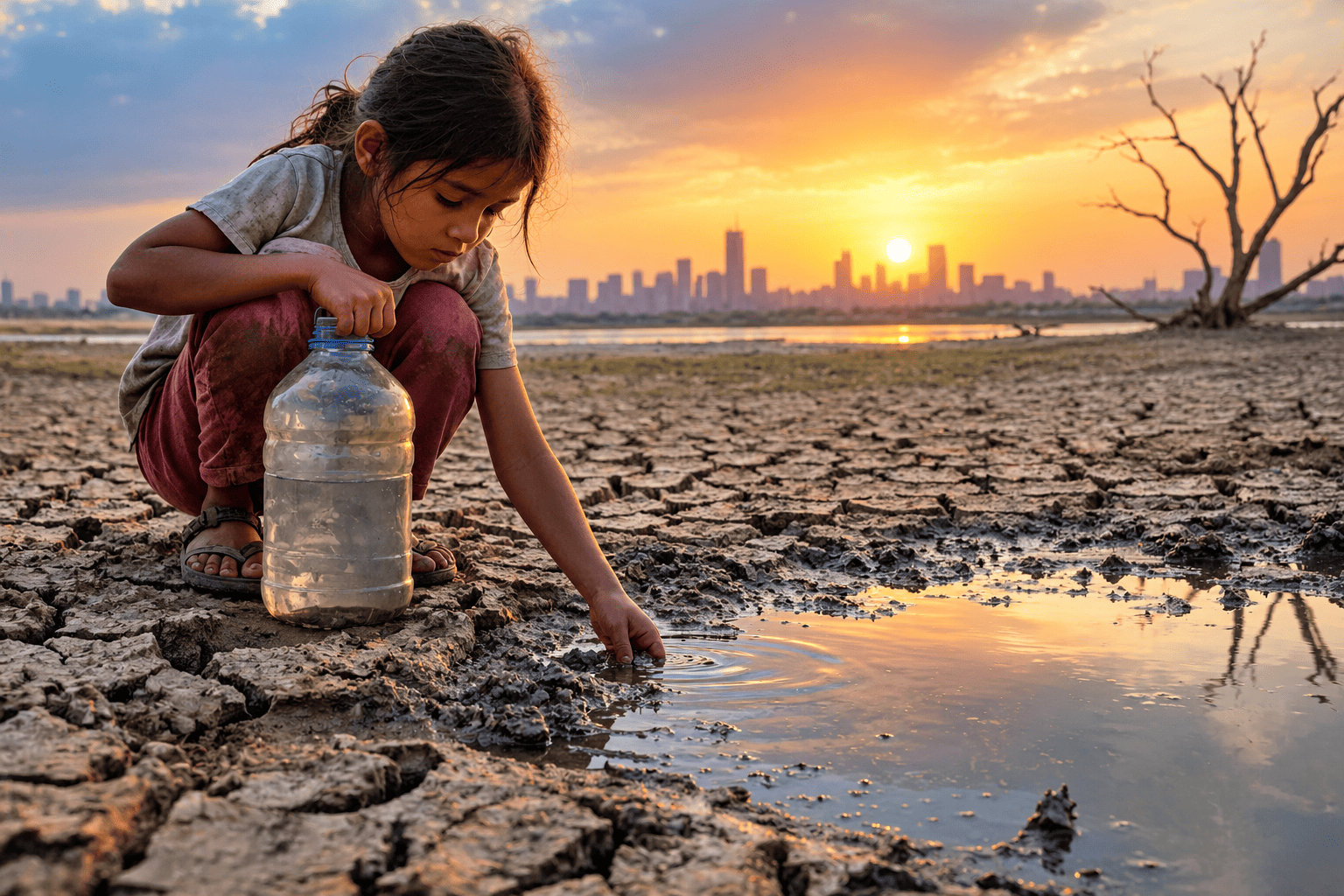
Water scarcity is becoming one of the defining environmental and development challenges of the 21st century. Across many regions, growing demand, climate change, pollution, ecosystem degradation and inadequate water management are placing increasing pressure on freshwater supplies.
The problem is not simply that the world is “running out of water.” Freshwater is continually renewed through the water cycle, but it is unevenly distributed, increasingly variable and often poorly managed. At the same time, millions of people still lack reliable access to safe drinking water.
The scale of the challenge is substantial. The United Nations World Water Development Report 2026 estimates that 2.1 billion people still lack safely managed drinking water. Meanwhile, the World Meteorological Organization reports that global freshwater resources are becoming increasingly erratic, with 2025 ranking among the driest years for river discharge in more than three decades.
Water scarcity therefore represents both an environmental problem and a human security issue, affecting health, food production, livelihoods, economic development and social stability.
What Is Water Scarcity?
Water scarcity occurs when the available water supply is insufficient to meet the needs of people, agriculture, industry and ecosystems. It can result from physical shortages of freshwater, excessive demand, inadequate infrastructure, pollution or failures in water governance.
It is useful to distinguish water scarcity from water insecurity and lack of access to safe drinking water.
- Physical water scarcity occurs when freshwater resources are insufficient to meet demand.
- Economic or infrastructural water scarcity occurs when water may exist but people cannot reliably access it because of inadequate infrastructure, investment or governance.
- Water insecurity refers more broadly to unreliable access to sufficient, safe and affordable water.
These conditions can overlap, but they are not identical. A country can have substantial freshwater resources while some communities lack safe and dependable water services.
The Global Water Crisis in Numbers
Several indicators illustrate the scale and complexity of the global water challenge :
| Key finding | Latest evidence |
|---|---|
| People without safely managed drinking water | 2.1 billion |
| Women and girls’ daily time spent collecting water | About 250 million hours |
| Agriculture’s share of global freshwater withdrawals | About 72% |
| People living in agricultural areas facing severe water constraints | About 1.2 billion |
| Countries facing extremely high annual water stress | 25 countries, according to WRI’s Aqueduct assessment |
| Global river conditions in 2025 | Among the driest years for river discharge in more than three decades |
The figures come from different monitoring systems and measure different aspects of the water crisis, so they should not be combined into a single estimate of the number of people affected by “water scarcity.”
Where Is Water Scarcity Most Severe?
Water stress varies dramatically from one region to another.
The Middle East and North Africa are among the world’s most water-stressed regions. The World Resources Institute’s Aqueduct Water Risk Atlas found that 83% of the population in the Middle East and North Africa was exposed to extremely high water stress, while South Asia had an exposure rate of 74% in its assessment. WRI defines extremely high water stress as using at least 80% of available renewable water supply.
Highly water-stressed countries include several nations in the Middle East and North Africa, where naturally limited freshwater resources are combined with high domestic, agricultural and industrial demand.
However, water scarcity is not confined to arid regions. Droughts, groundwater depletion, changing rainfall patterns and poor water management can create severe shortages in otherwise water-rich countries.
Climate change is also making the geographic picture more complicated. The World Meteorological Organization’s latest assessment found that the global water cycle is becoming increasingly unpredictable, with regions experiencing severe drought while others face destructive flooding. In 2025, river discharge was among the lowest recorded in more than three decades.
What Is Causing the Global Water Crisis?
Water scarcity rarely has a single cause. In most affected regions, several pressures reinforce one another.
1. Climate Change
Climate change is altering rainfall, evaporation, snow cover, glacier mass and river flows.
A warmer atmosphere can intensify the hydrological cycle, contributing to heavier rainfall in some areas while increasing drought risks in others. The IPCC has concluded that water-related risks increase with every degree of global warming. Its assessment projects that 3 to 4 billion people could be exposed to physical water scarcity at 2°C to 4°C of global warming, although regional outcomes vary and the estimates carry uncertainty.
The consequences are already visible in changing river flows and declining glacier mass.
WMO reported that 2025 marked the fourth consecutive year of widespread glacier loss across all monitored glacier regions. Long-term glacier retreat threatens water availability for communities and ecosystems that depend on mountain runoff, particularly during dry seasons.
2. Growing Demand for Water
Population growth, urbanization, economic development and changing consumption patterns are increasing pressure on freshwater resources.
Cities require water for households, sanitation, businesses and public services. Industries use water for manufacturing, cooling and processing. Agriculture requires large quantities of water to produce food.
When demand grows faster than sustainable supply, rivers, reservoirs and groundwater systems can come under increasing pressure.
3. Agriculture and Irrigation
Agriculture is the world’s largest freshwater user, accounting for approximately 72% of global freshwater withdrawals, according to the Food and Agriculture Organization. Irrigation is particularly important in areas where rainfall is insufficient or unreliable.
This creates a difficult policy challenge: water must be conserved without undermining food security.
Improving irrigation efficiency, reducing losses, selecting crops appropriate to local water conditions and improving soil and watershed management can help produce more food with less water.
4. Groundwater Depletion
Groundwater is an essential source of drinking water and irrigation for communities around the world. But when groundwater is pumped faster than aquifers can naturally recharge, water tables decline.
Over-extraction can increase pumping costs, damage ecosystems and, in coastal areas, contribute to saltwater intrusion.
Because groundwater is often hidden beneath the surface, depletion can remain unnoticed until the consequences become severe. Sustainable groundwater management therefore depends heavily on monitoring, accurate data and effective regulation.
5. Pollution
Water scarcity is not only about quantity. Pollution can make available water unsafe or too expensive to treat.
Agricultural runoff, industrial discharges, untreated wastewater and other pollutants can degrade rivers, lakes and groundwater. In effect, contamination reduces the amount of freshwater that is practically available for human and ecological use.
Protecting water quality is therefore an essential part of addressing water scarcity.
6. Poor Infrastructure and Governance
In some communities, the central problem is not the complete absence of water but the lack of reliable infrastructure and effective institutions.
Leaking distribution systems, insufficient storage, inadequate wastewater treatment and weak regulation can prevent available resources from reaching the people who need them.
The United Nations emphasizes that equitable governance is essential because water must be allocated among competing needs such as agriculture, cities, energy production, ecosystems and industry.
How Water Scarcity Affects Human Health
Reliable access to safe water is fundamental to public health.
When people cannot obtain safe water, they may be forced to rely on contaminated sources or reduce water use for hygiene and sanitation. These conditions can increase exposure to infectious diseases and make communities more vulnerable during emergencies.
The latest WHO and UNICEF Joint Monitoring Programme data show that 2.1 billion people still lacked safely managed drinking water in 2024. Safely managed drinking water means that an improved source is located on premises, available when needed and free from contamination.
Water insecurity can also affect health indirectly by increasing the time people spend collecting water, reducing opportunities for education and employment, and placing additional burdens on households.
Women and Girls Carry a Disproportionate Burden
Water scarcity does not affect everyone equally.
In many communities where reliable household water services are unavailable, women and girls are disproportionately responsible for collecting water. The 2026 UN World Water Development Report estimates that women and girls spend approximately 250 million hours every day collecting water worldwide.
The consequences can extend beyond time and physical effort. Long journeys to collect water can reduce time available for school, paid work and other activities.
The issue also highlights a broader governance problem: women remain underrepresented in many water-related decision-making structures and technical roles. The UN argues that greater participation and gender-responsive water policies are essential to achieving more equitable water management.
Water Scarcity, Food Security and the Economy
Water shortages can quickly become food and economic problems.
Agriculture depends on predictable access to water. Drought can reduce crop yields, increase livestock losses and raise food prices. For farmers who depend on rainfall or limited irrigation, prolonged water shortages can threaten household income and livelihoods.
Water is also essential to energy generation, manufacturing, mining and numerous service industries. Shortages or disruptions can therefore affect entire economies.
The connection between water and prosperity is particularly important in developing regions, where livelihoods may depend heavily on agriculture and where households often have fewer resources to adapt to drought.
Can Water Scarcity Lead to Conflict?
Water scarcity can contribute to social tensions, but it is misleading to describe water scarcity alone as an automatic cause of war.
Conflict typically results from multiple interacting factors, including political instability, poverty, inequality, weak institutions, environmental degradation and competition over resources.
The UN World Water Development Report emphasizes that water insecurity and unequal access can increase tensions and contribute to displacement, while cooperation over shared water resources can instead support stability and peace.
This distinction matters. Water can be a source of competition, but it can also provide an incentive for cooperation between communities and countries sharing rivers, aquifers and watersheds.
How Can the World Address Water Scarcity?
There is no single solution to the global water crisis. Effective responses must combine conservation, infrastructure, technology, governance and climate adaptation.
1. Improve Water Efficiency
Governments and industries can reduce unnecessary consumption by improving water-use efficiency.
In agriculture, measures include :
- More efficient irrigation systems
- Better soil-moisture management
- Reducing leaks and evaporation
- Crop choices suited to local conditions
- Improved water accounting and monitoring
Because agriculture accounts for the largest share of global freshwater withdrawals, improving agricultural water management can have a particularly significant impact.
2. Protect Groundwater and Watersheds
Sustainable groundwater management requires accurate information about aquifer recharge and extraction.
At the same time, forests, wetlands, rivers and other ecosystems can help regulate water availability and quality. Protecting watersheds can therefore be an important part of long-term water security.
3. Expand Wastewater Treatment and Reuse
Treated wastewater can provide an alternative source for some agricultural, industrial and municipal applications.
Reusing water where appropriate can reduce pressure on freshwater supplies while also limiting pollution entering rivers and coastal environments.
4. Invest in Reliable Water Infrastructure
Investment is essential for expanding access to safe drinking water and sanitation.
This includes :
- Water treatment facilities
- Distribution networks
- Storage infrastructure
- Wastewater treatment
- Leak detection and repair
- Monitoring systems
- Drought-resilient infrastructure
Infrastructure, however, must be accompanied by effective institutions capable of maintaining systems and ensuring equitable access.
5. Strengthen Water Governance
Good water management depends on reliable data, transparent rules and cooperation among governments, communities, farmers, industries and other users.
Transboundary rivers and aquifers require particular attention because water resources frequently cross national borders. Cooperation can reduce disputes and support more resilient management.
6. Adapt to Climate Change
Water policy increasingly needs to account for a more variable climate.
Governments can strengthen drought preparedness, improve early-warning systems, diversify water supplies, restore ecosystems and incorporate climate projections into infrastructure planning.
The WMO has stressed the importance of improved monitoring, data sharing and early warning as the global water cycle becomes more variable.
The Role of Individuals
Individual action cannot solve structural water scarcity by itself, but households can still reduce unnecessary demand.
Practical measures include :
- Repairing household leaks promptly.
- Using water-efficient fixtures and appliances.
- Avoiding unnecessary outdoor water use.
- Choosing landscaping suited to local climate conditions.
- Reducing food waste, since food production requires substantial amounts of water.
- Supporting policies and businesses that promote sustainable water management.
The most important changes, however, must occur at the level of infrastructure, agriculture, industry, governance and environmental protection.
Key Findings
The global water crisis is best understood as a combination of physical scarcity, unequal access, increasing demand and growing climate variability.
The most important findings are :
- 2.1 billion people lacked safely managed drinking water in 2024.
- Agriculture accounts for roughly 72% of global freshwater withdrawals, making agricultural water management central to the solution.
- The water cycle is becoming increasingly erratic, with WMO reporting that 2025 was among the driest years for global river discharge in more than three decades.
- Climate change is increasing water-related risks, with greater warming expected to expose more people to physical water scarcity.
- Water insecurity has unequal social consequences, with women and girls often carrying a disproportionate burden of water collection.
- Better governance and international cooperation are essential, particularly where communities or countries share water resources.
Conclusion : Water Scarcity Requires Action Now
Water scarcity is not a distant environmental threat. It is already affecting communities, agricultural systems, economies and ecosystems around the world.
The latest scientific and international assessments point to a water cycle that is becoming more variable while demand remains high. At the same time, billions of people still lack reliable access to safely managed drinking water.
Addressing water scarcity will require more than simply finding new sources of water. The long-term solution depends on using existing supplies more efficiently, protecting groundwater and ecosystems, expanding reliable water and sanitation infrastructure, reducing pollution, strengthening governance and adapting to climate change.
Water is a finite and unevenly distributed resource, but the global water crisis is not inevitable. Better management, investment, cooperation and equitable access can significantly improve water security.
Ensuring that people have sufficient, safe and affordable water is ultimately not only an environmental priority—it is a foundation for public health, food security, economic resilience, human dignity and sustainable development.
Sources and Further Reading
- United Nations World Water Development Report 2026 — UNESCO/UN-Water : Water for All People: Equal Rights and Opportunities.
- WHO/UNICEF Joint Monitoring Programme, 2025 : Progress on Household Drinking-Water, Sanitation and Hygiene 2000–2024.
- World Meteorological Organization, 2026 : State of Global Water Resources 2025.
- Food and Agriculture Organization: Agricultural Water Management and AQUASTAT data.
- Intergovernmental Panel on Climate Change: Climate Change 2022: Impacts, Adaptation and Vulnerability, Chapter 4 — Water.
- World Resources Institute: Aqueduct Water Risk Atlas and global water-stress analysis.
Leave a Reply