
Introduction
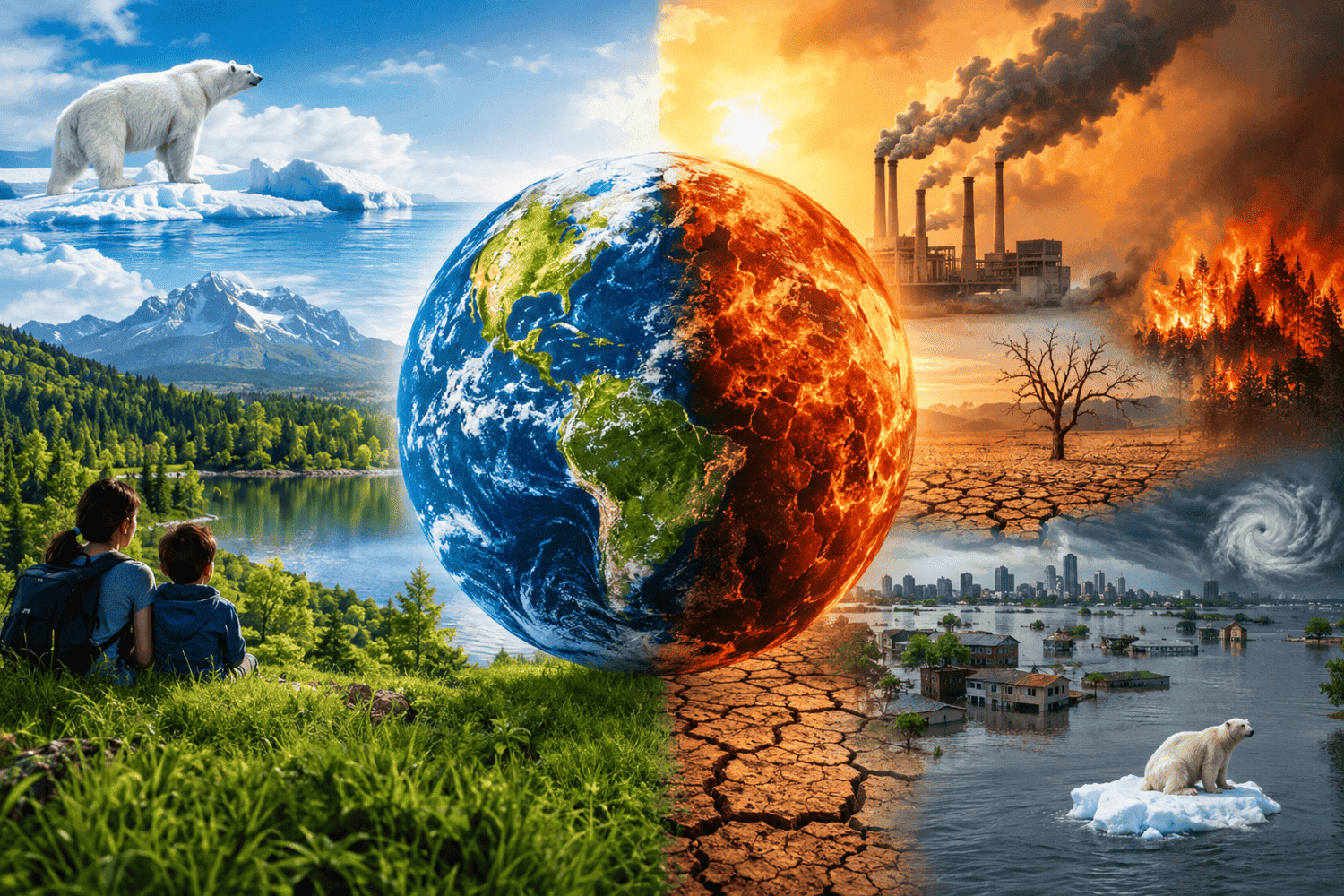
Global warming is one of the most significant environmental challenges facing humanity. Rising global temperatures are changing weather patterns, increasing the risks of extreme heat, threatening biodiversity, and placing pressure on food, water, and public health systems.
Although Earth’s climate has changed naturally throughout history, the rapid warming observed today is primarily driven by human activities, especially the burning of fossil fuels. The consequences extend beyond temperature increases, affecting communities, economies, and natural ecosystems worldwide.
Understanding global warming, its causes, and its impact on humans and the environment is essential for making informed decisions and supporting effective climate action.
What Is Global Warming?
Global warming refers to the long-term increase in Earth’s average surface temperature. It is a major component of climate change, which also includes changes in rainfall, ocean conditions, ice cover, and the frequency or intensity of certain extreme weather events.
The main driver of current global warming is the accumulation of greenhouse gases in the atmosphere. These gases trap some of the heat that Earth emits, strengthening the natural greenhouse effect.
Main Greenhouse Gases
The most important greenhouse gases associated with human-caused warming include:
- Carbon dioxide (CO₂) : Released primarily through burning coal, oil, and natural gas, as well as deforestation and some industrial processes.
- Methane (CH₄) : Emitted by activities such as livestock farming, fossil fuel production, and waste management.
- Nitrous oxide (N₂O) : Associated with agricultural fertilizers and other industrial activities.
- Fluorinated gases : Used in certain industrial and refrigeration applications.
The natural greenhouse effect makes Earth habitable. The problem is the additional warming caused by human activities.
What Causes Global Warming?
1. Burning Fossil Fuels
Coal, oil, and natural gas are major sources of energy for electricity generation, transportation, manufacturing, and heating. Burning these fuels releases carbon dioxide, which accumulates in the atmosphere and contributes to warming.
2. Deforestation and Land-Use Change
Forests absorb carbon dioxide through photosynthesis and store carbon in vegetation and soils. When forests are cleared or burned, stored carbon can be released, while the planet loses an important natural carbon sink.
Deforestation also destroys habitats and reduces biodiversity.
3. Agriculture and Livestock
Agricultural activities contribute to greenhouse gas emissions through livestock digestion, manure management, fertilizer use, and changes in land use. Methane and nitrous oxide are particularly important emissions from this sector.
4. Industrial and Urban Development
Industrial manufacturing, cement production, construction, and expanding urban areas contribute to emissions and energy demand. Cities can also experience higher temperatures than surrounding rural areas because of the urban heat island effect.
5. Transportation
Cars, trucks, ships, and aircraft contribute to global warming when powered by fossil fuels. The transport sector is therefore an important area for reducing emissions through cleaner energy, public transportation, and more efficient technologies.
Key Facts About Global Warming
| Key finding | Why it matters |
|---|---|
| Human activities are the main cause of recent global warming. | Reducing greenhouse gas emissions is central to addressing climate change. |
| Global warming affects both land and oceans. | Climate impacts extend from terrestrial ecosystems to marine environments. |
| Climate change creates risks for human health. | Heat, infectious diseases, air pollution, and food insecurity can threaten communities. |
| Ecosystems face increasing pressure. | Species may lose suitable habitats, and biodiversity can decline. |
| Climate impacts are not evenly distributed. | Vulnerable communities often face greater risks and have fewer resources to adapt. |
| Cutting emissions and adapting to unavoidable impacts are both necessary. | Climate action requires prevention and preparation. |
Impact of Global Warming on Humans
Global warming affects people through direct exposure to heat and extreme weather, as well as through changes in food systems, water supplies, health, and economic stability.
1. Human Health
Rising temperatures can increase the risk of heat exhaustion, heatstroke, dehydration, and other heat-related illnesses. Extreme heat can be especially dangerous for older adults, young children, outdoor workers, and people with certain existing health conditions.
Climate change also affects health indirectly by influencing air quality, infectious diseases, nutrition, and access to essential services.
Heat-Related Health Risks
Prolonged heat can :
- Increase the risk of heat-related illness and death.
- Worsen some cardiovascular and respiratory conditions.
- Reduce productivity among outdoor and physically demanding workers.
- Increase pressure on healthcare services during heatwaves.
Wildfire smoke and air pollution can further aggravate respiratory problems in affected areas.
2. Food Security and Agriculture
Global warming can disrupt agriculture through heat stress, drought, changing rainfall, floods, and the spread of certain pests and diseases.
Potential consequences include :
- Reduced crop yields in regions exposed to severe heat or water shortages.
- Greater pressure on livestock and agricultural workers.
- Changes in growing seasons and crop suitability.
- Increased risks to food availability and affordability.
The effects vary by crop, location, farming practices, and the ability of communities to adapt.
3. Water Scarcity
Climate change alters the water cycle. Some regions experience more severe droughts, while others face heavier rainfall and flooding.
Warming can affect :
- Freshwater availability.
- Agricultural irrigation.
- Drinking water supplies.
- Water quality.
- Snowpack and glacier-dependent water systems.
Water stress can intensify competition between households, agriculture, industry, and ecosystems.
4. Extreme Weather and Displacement
Global warming increases the likelihood or intensity of certain climate hazards, including extreme heat and heavy precipitation. It also contributes to sea-level rise, which increases risks for some coastal communities.
Floods, storms, droughts, and wildfires can damage homes, infrastructure, and livelihoods. Repeated disasters may force people to relocate temporarily or permanently.
Climate change is not the sole cause of every extreme weather event, but it can alter the conditions in which these events occur.
5. Economic Consequences
The economic impact of global warming can include damage to infrastructure, agricultural losses, reduced labor productivity, higher health costs, and disruptions to supply chains.
Low-income communities and people whose livelihoods depend on agriculture, fishing, or outdoor work may be particularly vulnerable.
Impact of Global Warming on the Environment
The environment is experiencing changes across terrestrial, freshwater, and marine ecosystems.
1. Rising Sea Levels
Global warming contributes to sea-level rise through two major processes:
- Thermal expansion : As ocean water warms, it expands.
- Melting land ice : Glaciers and ice sheets lose ice that eventually contributes to ocean levels.
Sea-level rise increases risks for low-lying coastal areas through flooding, erosion, saltwater intrusion, and damage to coastal ecosystems.
2. Melting Glaciers and Ice Sheets
Warming temperatures are contributing to the loss of glaciers and ice sheets in many regions. The decline of mountain glaciers can affect water resources, while ice loss from Greenland and Antarctica contributes to sea-level rise.
The loss of snow and ice also reduces Earth’s ability to reflect sunlight, creating a feedback that can amplify warming.
3. Biodiversity Loss
Climate change is placing increasing pressure on plants, animals, and microorganisms. Species may struggle when temperatures change faster than they can adapt or migrate.
Environmental impacts include :
- Shifts in species distribution.
- Habitat loss and fragmentation.
- Changes in breeding and migration patterns.
- Increased risks for species already threatened by other pressures.
- Disruption of ecological relationships.
Climate change interacts with habitat destruction, pollution, invasive species, and overexploitation, making conservation more challenging.
4. Ocean Warming and Acidification
The oceans absorb much of the excess heat associated with global warming and take up a substantial share of human-produced carbon dioxide.
Ocean warming can contribute to coral bleaching, marine heatwaves, and changes in marine ecosystems.
When seawater absorbs carbon dioxide, its chemistry changes and becomes more acidic. This process, known as ocean acidification, can make it more difficult for some marine organisms to build and maintain shells or skeletons.
5. Forests and Wildfires
Warming and changing precipitation patterns can increase stress on forests in some regions. Hotter, drier conditions can contribute to wildfire risk where fuels are available, although fire risk also depends on vegetation, land management, and weather.
Wildfires can destroy habitats, release stored carbon, reduce air quality, and damage communities.
6. Changes in the Water Cycle
A warmer atmosphere can hold more water vapor, influencing precipitation patterns. Climate change can intensify certain heavy rainfall events while increasing drought risks in other areas.
These changes affect rivers, wetlands, forests, agriculture, and freshwater biodiversity.
How Global Warming Affects Vulnerable Communities
The effects of global warming are not distributed equally. People living in poverty, coastal areas, drought-prone regions, or places with limited access to healthcare and infrastructure may face greater risks.
Vulnerability depends on factors such as :
- Exposure to climate hazards.
- Access to financial resources.
- Quality of housing and infrastructure.
- Availability of healthcare and emergency services.
- Dependence on climate-sensitive livelihoods.
- Capacity to adapt.
This makes climate change not only an environmental issue but also a question of public health, economic resilience, and social equity.
Solutions to Global Warming
Addressing global warming requires reducing greenhouse gas emissions while preparing communities for climate impacts that are already occurring or may be unavoidable.
1. Transition to Clean Energy
Replacing fossil fuels with low-carbon energy sources can reduce emissions. Renewable energy technologies, including solar and wind power, are important parts of this transition.
2. Improve Energy Efficiency
Using energy more efficiently in buildings, transportation, and industry can reduce emissions and lower energy demand.
Examples include :
- Energy-efficient appliances.
- Better building insulation.
- Efficient heating and cooling systems.
- Public transportation.
- More efficient industrial processes.
3. Protect and Restore Forests
Forest conservation, restoration, and sustainable land management can help protect biodiversity and maintain carbon storage.
Forests should not be treated as a substitute for reducing fossil fuel emissions, but they are an important part of climate and environmental strategies.
4. Build Climate-Resilient Communities
Adaptation measures help reduce the risks associated with climate change. These may include :
- Heat action plans and early-warning systems.
- Flood protection and improved drainage.
- Drought-resistant agricultural practices.
- Water conservation.
- Climate-resilient infrastructure.
- Protection and restoration of wetlands and coastal ecosystems.
5. Reduce Waste and Support Sustainable Consumption
Reducing food waste, improving recycling systems, using resources efficiently, and choosing durable products can support broader sustainability goals.
Individual choices matter, but large-scale changes in energy, transport, industry, agriculture, and public policy are essential for significant emissions reductions.
What Can Individuals Do to Help?
People can contribute to climate action through everyday decisions and community participation.
Practical steps include :
- Reduce unnecessary energy use at home.
- Choose public transportation, walking, cycling, or shared travel when practical.
- Reduce food waste and consider lower-emission food choices.
- Support responsible forest and ecosystem conservation.
- Use products efficiently and avoid unnecessary consumption.
- Learn about climate risks in the local community.
- Support credible climate policies and environmental initiatives.
The most effective actions depend on local conditions, available infrastructure, and the wider systems in which people live.
Frequently Asked Questions
What is the main cause of global warming?
The primary cause of current global warming is human activity that increases greenhouse gas concentrations, particularly the burning of coal, oil, and natural gas.
How does global warming affect human health?
It can increase heat-related illness, worsen some health conditions, contribute to air-quality problems, and influence infectious diseases, food security, and access to safe water.
What are the environmental effects of global warming?
Major effects include rising sea levels, melting glaciers, ocean warming, ocean acidification, ecosystem disruption, biodiversity loss, and changes in rainfall and drought patterns.
Can global warming be stopped?
The warming already caused by past emissions cannot be immediately reversed. However, limiting future warming remains possible by reducing greenhouse gas emissions rapidly and deeply, alongside adaptation to climate impacts.
Is global warming the same as climate change?
No. Global warming is the long-term rise in Earth’s average temperature. Climate change is a broader term that includes warming and changes in weather patterns, sea levels, precipitation, and other climate-related conditions.
Conclusion
Global warming is a far-reaching challenge that affects human health, food security, water resources, economies, and the natural environment. Its impacts are already being observed, and future risks will depend heavily on greenhouse gas emissions and the effectiveness of adaptation efforts.
Reducing emissions, protecting ecosystems, improving energy efficiency, and building resilient communities are essential steps toward a more sustainable future. Understanding global warming and its impact on humans and the environment is the foundation for informed decisions, responsible environmental stewardship, and effective climate action.
Sources and Further Reading
The following authoritative organizations provide evidence, assessments, and public information about global warming and its impacts.
- Intergovernmental Panel on Climate Change (IPCC) — Climate science, impacts, adaptation, and mitigation assessments.
- World Health Organization (WHO) — Climate change and human health.
- NASA — Global Climate Change — Evidence and explanations of Earth’s changing climate.
- United Nations Environment Programme (UNEP) — Global environmental issues and climate action.
- National Oceanic and Atmospheric Administration (NOAA) — Climate monitoring and scientific information.
Leave a Reply