
Introduction
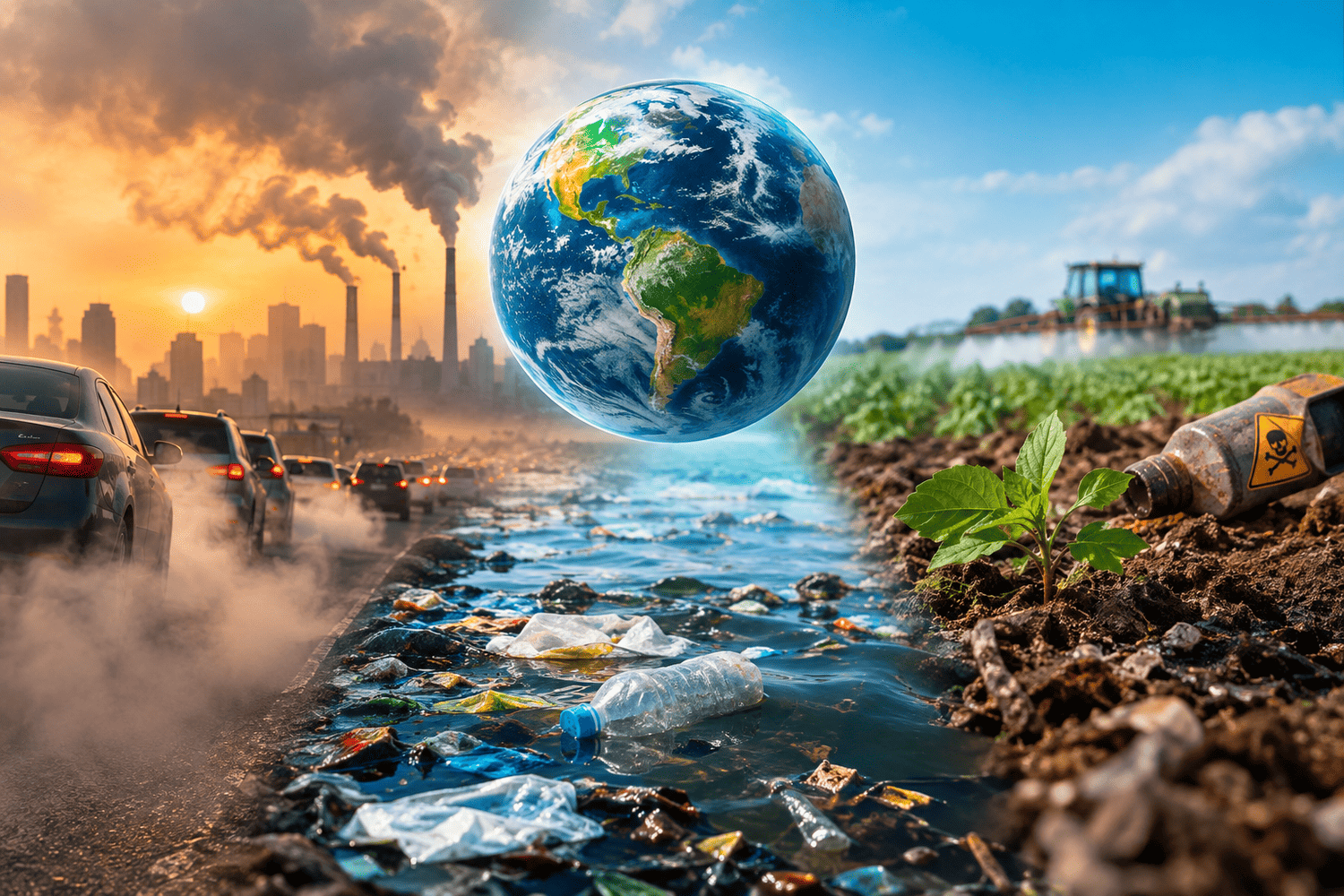
Environmental pollution is one of the most persistent challenges facing human health, ecosystems, and sustainable development. From vehicle emissions and industrial smoke to contaminated rivers and degraded farmland, pollution affects the natural systems that support life. Its consequences can extend across borders, communities, and generations.
Pollution occurs when harmful substances, organisms, or forms of energy enter the environment at levels that cause damage. It can affect the air we breathe, the water we drink, and the soil that produces our food. Although natural events can contribute to pollution, many of the most significant sources are linked to human activities, including fossil fuel combustion, industrial production, intensive agriculture, and poor waste management.
Understanding the causes and effects of environmental pollution is essential for protecting public health, preserving biodiversity, and building a cleaner, more resilient future.
What Is Environmental Pollution?
Environmental pollution is the introduction of harmful chemical, physical, or biological agents into the natural environment, resulting in changes that can threaten human health, wildlife, ecosystems, or environmental quality.
The United Nations Environment Programme (UNEP) identifies pollution and poor management of chemicals and waste as major threats to ecosystems and human well-being. Pollution can take several forms, but three interconnected categories are particularly important :
- Air pollution: The contamination of indoor or outdoor air by harmful gases, particles, and biological agents.
- Water pollution: The contamination of rivers, lakes, groundwater, oceans, and other water bodies.
- Soil pollution: The accumulation of harmful substances in soil, affecting its quality, organisms, and ability to support plant growth.
These forms of pollution often overlap. For example, industrial chemicals released into the air can settle on land or water, while agricultural runoff can transport pollutants from soil into rivers and coastal areas.
The Three Major Types of Environmental Pollution

1. Air Pollution
Air pollution occurs when harmful substances contaminate the atmosphere. It is associated with respiratory diseases, cardiovascular illness, and environmental damage.
Common sources: Transport, industry, power generation, and household fuel combustion.

2. Water Pollution
Water pollution occurs when contaminants enter freshwater or marine environments, reducing water quality and harming aquatic life.
Common sources: Untreated wastewater, agricultural runoff, industrial discharge, and plastic waste.

3. Soil Pollution
Soil pollution is the contamination of land by hazardous substances that can disrupt soil organisms, reduce soil functions, and affect food production.
Common sources : Pesticides, industrial chemicals, mining waste, heavy metals, and improper waste disposal.
Key Facts About Environmental Pollution
The following findings illustrate the scale and consequences of pollution.
| Finding | Evidence |
|---|---|
| Global air quality | The World Health Organization (WHO) reports that 99% of the world’s population lived in places exceeding its air quality guideline levels in 2019. |
| Air pollution and health | Combined ambient and household air pollution was associated with approximately 6.7 million premature deaths annually in WHO’s 2019 estimates. |
| Environmental health | WHO states that healthier environments could prevent nearly one-quarter of the global disease burden. |
| Water quality | UN-Water reports that 44% of household wastewater was not properly treated, based on its cited 2025 data. |
| Marine pollution | UNEP estimates that roughly 80% of marine pollution originates on land. |
Source note: These figures refer to different years, populations, and assessment methods. They should not be interpreted as one single measurement of global pollution.
Organisation mondiale de la santé
+4
What Causes Environmental Pollution?
Environmental pollution has many sources. Some arise from energy production and transportation, while others result from agriculture, urban development, and the disposal of waste.
1. Industrial Activities
Factories, refineries, mining operations, and other industrial facilities can release pollutants into the environment.
Potential pollutants include :
- Particulate matter and harmful gases.
- Heavy metals such as lead, mercury, and cadmium.
- Industrial wastewater and chemical residues.
- Hazardous waste and contaminated sediments.
Industrial pollution can affect multiple environmental compartments. A chemical released into a waterway, for example, may accumulate in aquatic organisms and move through the food chain.
2. Transportation and Fossil Fuels
Cars, trucks, ships, and aircraft contribute to pollution through fuel combustion and related activities. Power plants and heating systems that burn coal, oil, or gas are also important sources of air pollutants.
The WHO identifies transport, power generation, industry, residential energy use, and waste incineration among major sources of outdoor air pollution.
Organisation mondiale de la santé
+1
Reducing emissions through cleaner energy, public transportation, and improved vehicle standards can help lower air pollution.
3. Agriculture and Chemical Use
Agriculture can contribute to environmental pollution when fertilizers, pesticides, animal waste, or contaminated irrigation water are poorly managed.
Excess nutrients, particularly nitrogen and phosphorus, can enter waterways through runoff. This may cause eutrophication, a process in which excessive nutrient availability promotes algal growth and reduces oxygen levels in water.
Pesticides and other agricultural chemicals can also affect non-target organisms, including beneficial insects, aquatic species, and soil microorganisms.
4. Improper Waste Disposal
Poorly managed waste is a significant source of pollution in cities and rural areas.
Examples include :
- Open burning of household or agricultural waste.
- Dumping plastics and other refuse into rivers.
- Uncontrolled landfills and leaking waste sites.
- Inadequate collection and treatment of hazardous waste.
UNEP identifies poor management of chemicals and waste as a driver of environmental degradation and health risks.
UNEP – UN Environment Programme
+1
5. Urbanization and Population Growth
Urban growth increases demand for energy, transportation, housing, water, and consumer goods. Without adequate infrastructure, this can place pressure on waste collection, wastewater treatment, and air quality.
Urban development may also replace natural habitats with roads and buildings, reducing the capacity of ecosystems to absorb pollutants and regulate water flows.
Effects of Air Pollution on Health and the Environment


6
Air pollution is a major environmental health risk. It can affect people through both outdoor exposure and indoor exposure from polluting cooking fuels or other sources.
Common Air Pollutants
| Pollutant | Main sources | Potential effects |
|---|---|---|
| Fine particulate matter (PM2.5) | Vehicle exhaust, combustion, industry, fires | Cardiovascular and respiratory disease |
| Nitrogen dioxide (NO₂) | Traffic, fuel combustion, industry | Respiratory irritation and disease risk |
| Sulfur dioxide (SO₂) | Coal and oil combustion, metal smelting | Respiratory effects and acid deposition |
| Carbon monoxide (CO) | Incomplete combustion of fuels | Reduced oxygen delivery in the body |
| Ground-level ozone (O₃) | Chemical reactions involving pollutants in sunlight | Lung irritation and reduced respiratory function |
The WHO identifies particulate matter, carbon monoxide, ozone, nitrogen dioxide, and sulfur dioxide as pollutants of major public health concern.
Organisation mondiale de la santé
+1
Health Consequences
Long-term exposure to polluted air is associated with :
- Heart disease and stroke.
- Chronic obstructive pulmonary disease (COPD).
- Lung cancer.
- Respiratory infections.
- Asthma-related health problems.
Children, older adults, pregnant people, and individuals with existing health conditions may face particular risks from air pollution. Exposure levels and health outcomes vary by location, pollutant, duration, and individual circumstances.
Environmental Consequences
Air pollution also affects ecosystems. Certain pollutants contribute to acid deposition, which can alter soil and freshwater chemistry. Ground-level ozone can damage vegetation, while airborne particles may reduce visibility and affect atmospheric processes.
Many sources of air pollution, especially fossil fuel combustion, also emit greenhouse gases. Reducing these sources can therefore offer benefits for both air quality and climate mitigation.
Organisation mondiale de la santé
+1
Water Pollution : Causes, Effects, and Risks


7
Water pollution affects freshwater resources and marine ecosystems. It can make water unsafe for human use, disrupt aquatic habitats, and interfere with food production.
Major Causes of Water Pollution
Untreated wastewater: Domestic sewage and industrial wastewater may contain pathogens, nutrients, organic matter, and hazardous chemicals.
Agricultural runoff: Rainwater can carry fertilizers, pesticides, and animal waste into rivers, lakes, and coastal waters.
Plastic and solid waste: Plastics can accumulate in waterways and break down into smaller particles, including microplastics.
Mining and industrial discharge: Mining operations and industrial processes can release metals, sediments, and other contaminants.
Effects on Human Health
Contaminated water can expose people to disease-causing organisms and hazardous chemicals. Depending on the contaminant, exposure may cause gastrointestinal illness, chemical poisoning, or longer-term health effects.
Water quality is closely connected to sanitation and hygiene. WHO and UN-Water emphasize the importance of safe water, wastewater treatment, and monitoring to protect public health.
UN-Water
+2
Effects on Aquatic Ecosystems
Water pollution can damage ecosystems through several mechanisms:
- Eutrophication: Excess nutrients stimulate algal blooms and may deplete oxygen in the water.
- Toxic contamination: Chemicals and heavy metals can harm fish, invertebrates, plants, and microorganisms.
- Habitat degradation: Sediment, waste, and chemical contamination can alter aquatic habitats.
- Food-chain contamination: Some pollutants accumulate in organisms and become more concentrated at higher trophic levels.
UNEP reports that marine pollution originates largely from land-based activities, including wastewater, plastics, nutrient runoff, and other pollutants.
UNEP – UN Environment Programme
+1
Soil Pollution and Its Impact on Food Security


6
Soil is a vital natural resource. It supports plant growth, stores carbon, cycles nutrients, filters water, and provides habitat for countless organisms.
Soil pollution occurs when harmful substances accumulate in land at levels that impair these functions.
Main Sources of Soil Pollution
- Excessive or inappropriate use of pesticides and fertilizers.
- Industrial waste and chemical spills.
- Mining activities and metal contamination.
- Leaking landfills and improper waste disposal.
- Contaminated irrigation water.
- Persistent plastics and other synthetic materials.
Effects on Soil Health
Pollution can disrupt soil microorganisms, reduce biological activity, and alter nutrient cycling. Some contaminants persist for long periods, making remediation difficult.
Heavy metals such as lead, cadmium, and mercury may remain in soil and potentially enter crops or the food chain. The risk depends on the chemical form, concentration, soil properties, and exposure pathway.
Soil Pollution and Food Security
Contaminated soil can reduce agricultural productivity and affect the safety of food grown on polluted land. Microplastics and other contaminants are also being investigated for their effects on soil organisms and plant growth.
Important distinction: Soil pollution is not the same as soil erosion or land degradation, although these problems can interact. Pollution concerns harmful contaminants, while degradation includes broader losses of soil quality and ecological function.
UNEP identifies land and soil pollution as an important environmental challenge and notes that soil plays a critical role in water regulation, nutrient cycling, and biodiversity.
Sustainable developments Goals
+1
How Environmental Pollution Affects Biodiversity and Ecosystems
Pollution does not affect humans alone. Plants, animals, microorganisms, and entire ecosystems can be harmed by exposure to contaminants.
Impacts on Wildlife
Pollutants may cause :
- Direct toxicity and mortality.
- Reduced reproduction and development.
- Habitat degradation.
- Disruption of feeding and migration patterns.
- Bioaccumulation of harmful substances.
For example, plastic waste can injure marine animals through ingestion or entanglement. Chemical pollutants may accumulate in aquatic food webs and affect species that consume contaminated organisms.
Ecosystem Services at Risk
Healthy ecosystems provide services that benefit society, including :
| Ecosystem service | How pollution can interfere |
|---|---|
| Clean water | Contamination can reduce water quality and increase treatment needs. |
| Food production | Soil and water pollutants may affect crop and fish production. |
| Pollination | Pesticides and habitat pressures can affect pollinating organisms. |
| Climate regulation | Damage to forests, wetlands, and marine ecosystems can reduce ecological functions. |
| Biodiversity | Toxic substances and habitat degradation can reduce species survival. |
Pollution can interact with climate change, habitat loss, and other environmental pressures, making recovery more difficult in some ecosystems.
Organisation mondiale de la santé
+2
Environmental Pollution and Climate Change : What’s the Difference?
Environmental pollution and climate change are closely connected, but they are not identical.
Environmental pollution refers to harmful contamination or disturbance of the environment. It includes polluted air, water, and soil, as well as chemical and waste-related hazards.
Climate change refers to long-term changes in Earth’s climate, including changes in temperature, precipitation, and weather patterns. Human activities that release greenhouse gases are a major driver of current climate change.
The connection is clear in many energy systems: burning fossil fuels releases greenhouse gases and air pollutants. However, not every pollutant is a greenhouse gas, and some climate-related emissions do not directly cause conventional air, water, or soil contamination.
Addressing both challenges requires cleaner energy, better resource management, sustainable transport, and policies that reduce environmental risks.
Solutions to Environmental Pollution
Reducing pollution requires action from governments, businesses, communities, and individuals. The most effective measures generally focus on preventing pollution at its source rather than relying only on cleanup after contamination occurs.
1. Transition to Cleaner Energy
Replacing high-pollution fuels with cleaner energy sources can reduce harmful emissions. Energy efficiency, renewable electricity, and cleaner household cooking technologies can help lower pollution from energy use.
2. Improve Waste Management
Effective waste management includes :
- Waste reduction and reuse.
- Recycling where appropriate.
- Composting organic waste.
- Safe collection and treatment of hazardous materials.
- Preventing litter from entering waterways.
Waste prevention is particularly important because it reduces the need for disposal and the environmental impacts associated with production.
3. Strengthen Industrial Regulation
Governments and regulatory agencies can reduce pollution through emission standards, wastewater controls, environmental monitoring, and enforcement.
Industries can also adopt cleaner production processes, resource-efficient technologies, and pollution-control equipment.
4. Promote Sustainable Agriculture
Farmers can reduce pollution by using nutrients more efficiently, minimizing unnecessary pesticide applications, protecting soil, and preventing runoff.
Practices such as buffer strips, integrated pest management, and soil conservation can support healthier land and waterways when adapted to local conditions.
5. Protect and Restore Ecosystems
Wetlands, forests, grasslands, and coastal ecosystems can help filter water, store carbon, and provide habitat. Protecting these areas and restoring degraded ecosystems can support environmental resilience.
6. Improve Environmental Monitoring
Reliable data are essential for identifying pollution sources, measuring exposure, and evaluating whether policies are working.
WHO emphasizes the importance of air quality monitoring and evidence-based policies. Similar monitoring is needed for water quality, soil contaminants, and hazardous waste.
Organisation mondiale de la santé
+2
What Can Individuals Do to Reduce Pollution?
Individual actions cannot replace effective environmental policies and industrial accountability, but they can support pollution prevention.
Practical Steps at Home
- Use energy-efficient appliances and avoid unnecessary energy consumption.
- Choose cleaner cooking technologies when available and safe.
- Reduce single-use products and dispose of waste properly.
- Avoid pouring chemicals, oils, or medicines into drains unless local guidance permits it.
- Use water responsibly and support wastewater protection.
- Choose public transport, walking, cycling, or shared transport where practical and safe.
- Follow local guidance on recycling, composting, and hazardous waste.
The most meaningful long-term improvements come from combining responsible individual behavior with infrastructure, regulation, and investment that reduce pollution at scale.
Frequently Asked Questions About Environmental Pollution
What are the three main types of environmental pollution?
The three major types are air pollution, water pollution, and soil pollution. They are interconnected and can affect human health, biodiversity, and natural resources.
What is the biggest cause of environmental pollution?
There is no single cause across all environments. Major contributors include fossil fuel combustion, industrial activity, agriculture, transportation, and poor waste management. The dominant sources differ by location and pollutant.
How does environmental pollution affect human health?
Pollution can contribute to respiratory disease, cardiovascular illness, infectious diseases, chemical exposure, and other health problems. The effects depend on the pollutant, exposure level, duration, and individual vulnerability.
Can environmental pollution be prevented?
Much pollution can be reduced through source prevention, cleaner energy, better waste management, effective regulation, wastewater treatment, sustainable agriculture, and environmental monitoring.
Why is environmental pollution a global problem?
Air and water pollutants can travel across borders, while contaminated resources and degraded ecosystems can affect food systems, economies, and public health. Pollution also interacts with other environmental challenges, including climate change and biodiversity loss.
Conclusion : Protecting Air, Water, and Soil
Environmental pollution is a major threat to the natural systems that sustain human life. Its effects are visible in polluted air, contaminated waterways, degraded soils, and declining ecosystem health. The consequences extend beyond the environment, affecting public health, food security, biodiversity, and economic well-being.
Addressing air, water, and soil pollution requires a combination of prevention, scientific monitoring, responsible resource management, and effective environmental policies. Governments, industries, communities, and individuals all have a role in reducing pollution and protecting natural resources.
A cleaner future depends on recognizing that air, water, and soil are interconnected. By reducing harmful emissions, preventing contamination, and investing in sustainable solutions, societies can protect environmental quality and support healthier communities for generations to come.
Sources and Further Reading
The article is based on authoritative environmental and public health sources. Key statistics are dated according to the underlying publications and should not be treated as a single-year global estimate.
World Health Organization
Air pollution, environmental health, and pollution-related mortality.
- WHO : Air pollution
- Ambient (outdoor) air pollution and health
- WHO : Environmental health
- Mortality from environmental pollution
United Nations Environment Programme
Pollution, chemicals, waste, marine ecosystems, and soil protection.
- Chemicals and pollution action
- Why environment, health and pollution matter
- Ecosystem degradation and pollution
- Pollution Indicator Framework
UN-Water
Water quality and wastewater facts and data.
– Water Quality and Wastewater
Editorial SEO checklist
- Search intent : Informational; explains environmental pollution, its causes, effects, and solutions.
- Keyword placement : Primary keyword appears in the H1, introduction, subheadings, and conclusion naturally.
- Readability : Short paragraphs, descriptive headings, and tables where useful.
- Trustworthiness : Health and environmental claims are supported by WHO, UNEP, and UN-Water.
- Content quality : Original synthesis, objective language, and distinctions between pollution types.
- Publication recommendation : Add the author’s name, credentials, editorial review date, and relevant internal links before publishing.
Leave a Reply